
Coral Reef Conservation for Snorkelers
A reef can take one careless kick and need years to grow back. Here is how to snorkel without leaving a mark, and who is working to bring reefs back.
How snorkelers protect reefs
Most reef damage from snorkelers is accidental: a fin kick in shallow water, standing up to fix a mask, or grabbing coral in a wave. Stay where the water is deep enough to float without touching anything, and practice in sand first.
Get in and out over sand, not reef. If you need a rest, roll onto your back or use a float. Keep cameras and selfie sticks close to your body.
Wildlife is not a show. Animals that are chased or crowded leave their resting and feeding areas, which is why the distance rules below exist.
Reef-safe sunscreen rules by state
Hawaii. Since January 1, 2021 Hawaii has banned the sale of sunscreens containing oxybenzone or octinoxate without a prescription. Maui County goes further: since October 1, 2022 only mineral sunscreens may be sold there.
Florida. There is no state ban, and a 2020 state law stops cities from passing their own. The Florida Keys National Marine Sanctuary still asks visitors to choose mineral sunscreen.
California. No sunscreen ban, but the coves and reserves we cover are Marine Protected Areas where you should leave no trace.
What reef-safe means. The term is not regulated. Look for non-nano zinc oxide or titanium dioxide as the only active ingredients, and better still, cover up with a rash guard so you need less sunscreen in the water.
Reef-safe rules by destination
Every guide has its own local rules: closures, reserves, permits and distances.
- California
- Catalina Island
- Channel Islands National Park
- La Jolla
- La Jolla Cove
- La Jolla Underwater Park (Matlahuayl State Marine Reserve)
- Laguna Beach
- Los Angeles
- San Diego
- Florida
- Clearwater
- Crystal River
- Destin
- Dry Tortugas National Park
- Fort Lauderdale
- Islamorada
- Key Largo
- John Pennekamp Coral Reef State Park
- Key West
- Florida Keys
- Bahia Honda State Park
- Looe Key Sanctuary Preservation Area
- Marathon
- Miami
- Biscayne National Park
- Naples, Marco Island and Sanibel
- Palm Beach
- Blue Heron Bridge (Phil Foster Park)
- Panama City Beach
- Pensacola
- Florida Springs
- Hawaii
- Big Island
- Manta Ray Night Snorkel
- Kealakekua Bay (Captain Cook Monument)
- Two Step (Honaunau Bay)
- Kona
- Kauai
- Poipu Beach Park
- Tunnels Beach (Makua)
- Anini Beach Park
- Maui
- Turtle Town (Makena)
- Molokini Crater
- Honolua Bay
- Black Rock (Puu Kekaa), Kaanapali
- Kapalua Bay
- Oahu
- Hanauma Bay Nature Preserve
- Sharks Cove (Pupukea)
- Waikiki (Queen's Surf and Waikiki MLCD)
- Electric Beach (Kahe Point)
- Ko Olina lagoons
Who protects our reefs
These local groups restore coral, rescue wildlife and keep the water clean. Volunteer a morning, donate, or just follow their work.
- Volunteer days
Catalina Island Conservancy
Island land protection and giant sea bass outreach on Catalina
Stewards most of Catalina Island and runs public education, including talks on giant sea bass recovery. Its land protection helps keep the water along the island's coast healthy.
Visit catalinaconservancy.org → Channel Islands National Marine Sanctuary
Federal protection of 1,470 square miles of ocean around the northern islands
NOAA manages the sanctuary around Anacapa, Santa Cruz, Santa Rosa, San Miguel and Santa Barbara. Its site covers regulations and ways to plan a visit.
Visit channelislands.noaa.gov →- Volunteer days
San Diego Coastkeeper
Protecting San Diego waterways and coastal water quality
A San Diego nonprofit that works on water quality and coastal protection. Visitors can help by keeping beaches clean and reporting illegal discharges.
Visit sdcoastkeeper.org → - Volunteer days
Laguna Ocean Foundation
Tide pool education and marine protection in Laguna Beach
A local nonprofit that teaches tide pool etiquette and ocean stewardship in Laguna Beach. Read its tidepool guide before low tide visits and follow its look-don't-touch advice.
Visit lagunaoceanfoundation.org → - Volunteer days
Coral Restoration Foundation
Coral nurseries and reef restoration in the Florida Keys
A Key Largo nonprofit that grows corals in underwater nurseries and plants them on Keys reefs. It runs volunteer and visitor programs. Confirm current dates and fees on its site.
Visit coralrestoration.org → - Volunteer days
Reef Relief
Reef education and advocacy based in Key West
A Key West nonprofit working on reef conservation, education and local advocacy. Check the site for events and ways to help.
Visit reefrelief.org → Save the Manatee Club
Manatee protection, education and advocacy
A nonprofit that works to protect manatees and their habitat, with guidance on viewing manatees responsibly. Its site covers manatee facts and how to help.
Visit savethemanatee.org →- Volunteer days
Tampa Bay Watch
Tampa Bay habitat restoration
A nonprofit restoring Tampa Bay through oyster reefs, seagrass, living shorelines and marine debris removal. Volunteers can sign up through its calendar to build oyster reef balls or help at project sites.
Visit tampabaywatch.org → Nova Southeastern University coral program
Coral research and restoration on Broward reefs
NSU's oceanographic researchers study and restore Southeast Florida reefs and have worked with Coral Restoration Foundation to expand a nursery of staghorn and elkhorn coral for Broward County.
Visit nsuocean.nova.edu →Southeast Florida Coral Reef Initiative
Regional reef protection across Broward, Miami-Dade, Palm Beach and Martin counties
A partnership of local, state and federal agencies and organizations that coordinates reef protection and restoration priorities for Southeast Florida's coral reef.
Visit southeastfloridareefs.net →Mote Marine Laboratory, Islamorada Coral Nursery
Coral nursery and reef restoration in the Upper Keys
Mote's nursery on Upper Matecumbe Key can hold up to 20,000 coral fragments, which are planted onto nearby reefs including Cheeca Rocks. Learn how they attach coral to existing heads and keep your fins off planted colonies.
Visit mote.org →Mission: Iconic Reefs (NOAA)
Large scale restoration of seven Keys reefs, including Cheeca Rocks
NOAA lists Cheeca Rocks among seven priority reefs where partners grow and plant corals. The reef is dominated by star and boulder corals. Respect marked restoration areas and any closures posted by your captain.
Visit sanctuaries.noaa.gov →- Volunteer days
Coral Restoration Foundation
Coral nurseries and reef restoration in the Upper Keys
CRF grows staghorn and elkhorn coral in offshore nurseries off Key Largo and plants them on degraded reefs. It runs public snorkel and dive programs with local shops and takes volunteers.
Visit coralrestoration.org → Mote Marine Laboratory
Coral restoration in the Florida Keys
Mote grows and plants corals across the Keys. Its Key West project planted more than 12,000 fragments of five species along a snorkel trail at Fort Zachary Taylor in 2016 and 2017.
Visit mote.org →The Turtle Hospital
Sea turtle rescue and rehabilitation in Marathon
The Turtle Hospital treats injured and sick sea turtles and releases them back to the ocean. Visits are by guided tour of about 90 minutes, with an education center and gift shop. Book ahead in winter, and check the current ticket price on the official site.
Visit turtlehospital.org →Biscayne National Park Institute
Education and eco-tours in Biscayne National Park
The park's official nonprofit partner runs guided snorkel, paddle and cruise trips in Biscayne National Park, and offers a snorkeling debris cleanup trip where visitors help remove marine debris from the water.
Visit biscaynenationalparkinstitute.org →Sanibel-Captiva Conservation Foundation
Water quality and wildlife on Sanibel and Captiva
A local nonprofit that monitors water quality and wildlife, and posts updates after storms such as Ian and Milton. Its news page is a good check on conditions on the islands.
Visit sccf.org →- Volunteer days
Loggerhead Marinelife Center
Sea turtle rescue, research and ocean education in Juno Beach
A nonprofit sea turtle hospital and research center with a volunteer program. It also hosts a weekly self-guided beach cleanup, which the state lists on Saturday mornings. Confirm current volunteer shifts with the center.
Visit marinelife.org → Navarre Beach Marine Sanctuary
Artificial reef building and maintenance
A nonprofit that builds and maintains the artificial snorkel and dive reefs at Navarre Beach Marine Park.
Visit navarrebeachmarinesanctuary.org →- Volunteer days
Hawaii Wildlife Fund
Marine debris cleanups and turtle and monk seal protection
A nonprofit with volunteer programs on Maui, Hawaii Island and Kauai. Volunteers join beach and underwater cleanups and marine surveys. Its site also lists the NOAA marine animal emergency hotline.
Visit wildhawaii.org → - Volunteer days
Reef Check Hawaii
Citizen-science reef surveys
The Hawaii program of Reef Check trains volunteers to survey reef health and shares the data with researchers and agencies. A 2024 notice described a relaunch, so confirm current survey dates on the site.
Visit reefcheck.org → Manta Pacific Research Foundation
Research and conservation of Kona manta rays
A Kailua-Kona nonprofit that studies manta rays and keeps the Kona Manta ID Catalog. It has supported tour participant guidelines and operator standards, and its website takes donations.
Visit mantapacific.org →- Volunteer days
Pacific Whale Foundation
Marine research and conservation based on Maui
A 501(c)(3) nonprofit that runs marine research, education and conservation from Maui. Its PacWhale Eco-Adventures tours help fund that work, and you can book trips or join programs through the site.
Visit pacificwhale.org → - Volunteer days
Hawaii Wildlife Fund
Sea turtle, monk seal and marine debris work on Maui
Founded in 1996, the group protects hawksbill nests and hatchlings on Maui, supports monk seal watches and runs beach and net cleanups. It has a Discovery Center at Whalers Village in Kaanapali and takes volunteers.
Visit wildhawaii.org → Malama Pupukea-Waimea
Community stewardship of the Pupukea-Waimea Marine Life Conservation District
A community group on the North Shore that works to protect the Pupukea-Waimea MLCD, which covers Sharks Cove and Three Tables. Check their site for education programs and volunteer days.
Visit pupukeawaimea.org →
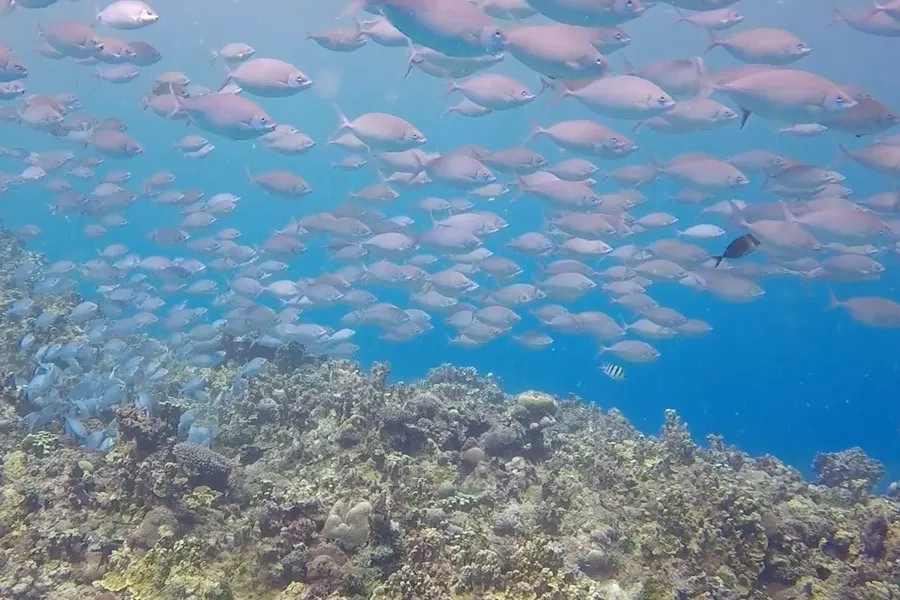
Look. Don't touch.
Leave only bubbles.
Do
- Wear a rash guardOr mineral sunscreen, applied well before you swim.
- Float flat over shallow reefKeep fins up so you never kick coral or stir sand.
- Book a local Guardian guideThey know the rules, the currents and the animals.
Never
- Touch, chase or feed wildlifeLet animals choose how close they come.
- Stand on or grab the reefTired? Float on your back or find sand.
- Take shells, sand or coralPhotos only. Leave it for the next swimmer.
Reef-safe gear
What we pack for every snorkel trip. Each link searches the category on Amazon so you can compare brands and prices.
- Reef-safe
Mineral reef-safe sunscreen
Non-nano zinc oxide only. No oxybenzone or octinoxate, which Hawaii bans.
Shop on Amazon → - Sun cover
Long sleeve rash guard
The best sun protection is fabric. Less sunscreen in the water, less sunburn on your back.
Shop on Amazon → - Own your gear
Mask, snorkel and fin set
A low-volume mask that fits beats any rental. Short travel fins pack easily.
Shop on Amazon → - Safety
Snorkel vest or float
An inflatable vest lets you rest without standing on the reef. Lifeguards love them.
Shop on Amazon →
As an Amazon Associate we earn from qualifying purchases. Disclosure.